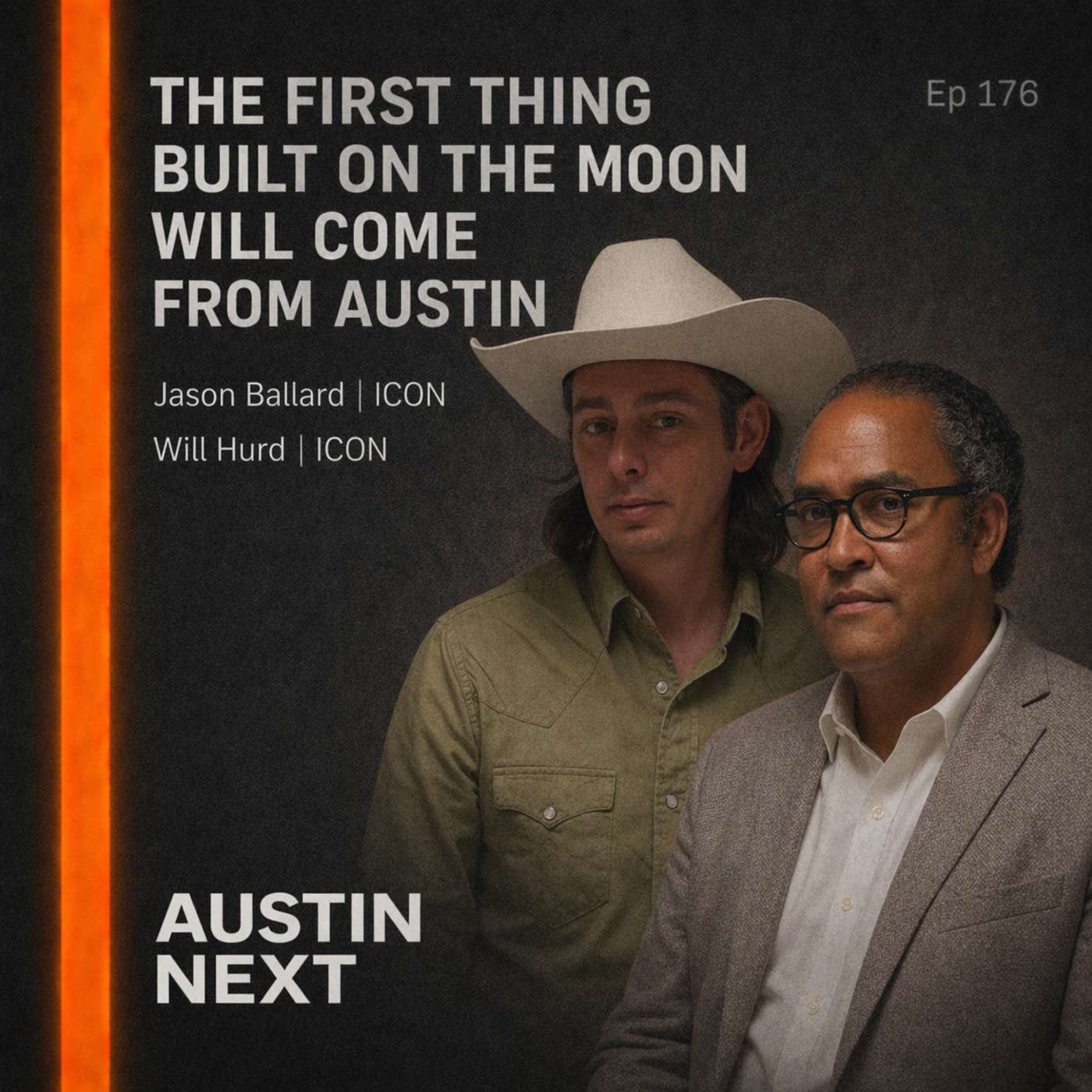
The First Thing Built on the Moon Will Come from Austin | Jason Ballard & Will Hurd, ICON

 Apple Podcasts
 Spotify
 Goodpods
 Amazon Music
 RSS Feed
 ICON has been telling the same story since 2018. Humanity has a construction problem that solving for regulations and supply-demand incentives alone won't fix. We need fundamentally new ways to build.
Jason Ballard, ICON's founder and CEO, and Will Hurd, the former CIA officer, congressman, and OpenAI board member who just joined as President of ICON Prime, came on to lay out what happens when a non-consensus thesis held for eight years starts to materialize in the real world. The conversation cuts across the full stack, housing, AI, robotics, labor, reindustrialization, and space. The through-line is Ballard's argument that breakthrough technologies are never narrow, that building the technology for a moon base solves the housing and building crisis on Earth.
Agenda
- 0:00 What ICON is building and why shelter is broken
- 6:40 The regulation stack and ICON as a technology company
- 11:40 Customer shapes, business model, and the innovation stack
- 17:10 AI, ChatGPT from the inside, and the case for optimism
- 23:40 The spoons-and-ditches fallacy and Hurd's regulation inversion
- 30:30 What is ICON Prime and the barracks crisis
- 36:40 Military construction, Afghanistan, and expeditionary printing
- 42:40 The moon base, Olympus, and in-situ resource utilization
- 49:40 Eight years of the same thesis and software's limit
- 56:40 Austin's talent gravity and the ICON diaspora
- 60:40 The moon in our lifetime
- 64:40 National security, espionage, and Austin as a target
- 68:40 Laser on the moon, 2028
Previous ICON Episode with Evan Loomis
Guest Links & Bio
Jason Ballard: X/Twitter
Will Hurd: LinkedIn
ICON: Website, ICON Prime, X/Twitter, LinkedIn, YouTube
Jason Ballard
Jason Ballard has dedicated his life to working on big problems in service to humanity, most recently and notably as the co-founder and CEO of ICON, the construction technologies company using construction-scale 3D printing to tackle the global housing crisis and prepare to build on other worlds. ICON has been named one of the "Most Innovative Companies in the World" by Fast Company and recently profiled on CBS’s 60 MINUTES. Raising $451 million to date in funding, ICON has delivered communities of resilient 3D-printed homes at high-speed and lower cost in the U.S. and internationally and forged partnerships with world-renowned architects, builders and housing organizations missionally aligned to shift the paradigm of homebuilding. In fall 2022, ICON was awarded $57.2 million from NASA to develop a lunar surface construction system that will target humanity’s first-ever construction on another planetary body. In 2019, Ballard was awarded the Austin Under 40 Award in the Technology category. In 2021, Ballard was named to TIME100 Next as one of the emerging leaders shaping the future as well as Newsweek’s America's Greatest Disruptors: Visionaries and Innovators Who Are Changing the World.
Prior to co-founding ICON, Ballard served as CEO of an eco-friendly home upgrade company that normalized sustainable and healthy approaches to home improvement. Before becoming an entrepreneur, Ballard worked at a homeless shelter, in various roles in sustainable building, and as an environmental consultant for ACRT. Ballard is a GLG Social Impact Fellow and served on the Carbon War Room / Rocky Mountain Institute Energy Think Tank. Ballard hails from East Texas and studied conservation biology at Texas A&M University. He also completed a masters program in Space Resources at Colorado School of Mines in 2022. He enjoys astronomy, ultrarunning, chess, comic books, and outdoor activities when he has free time. He resides in Austin, TX with his four children.
Will Hurd
The Honorable Will Hurd is a former CIA officer and congressman whose career spans intelligence, cybersecurity, artificial intelligence policy, and public service. He currently serves as Division President of ICON Prime, a space and defense tech company and will lead ICON Prime's strategy and government partnerships as the company scales its robotic construction technology across the national security enterprise and beyond Earth. He is also the author of American Reboot: An Idealist Guide to Getting Big Things Done. Hurd brings deep expertise at the intersection of technology, national security, and governance to his board roles and ongoing policy work.
Hurd began his career serving overseas in the CIA, where he worked to prevent attacks on the United States and disrupt efforts to smuggle nuclear materials into the country. He later held roles at Crumpton Group and FusionX, helping defend critical infrastructure from cyber threats. In 2014, he was elected to the U.S. House of Representatives, representing Texas’s 23rd District, where he served three terms and played a key role in shaping technology and national security policy.
Following his time in Congress, Hurd held leadership roles at Allen & Company and CHAOS Industries. He also previously served on the boards of In-Q-Tel and OpenAI.
He currently serves on the board of directors for Personal.AI, The Aerospace Corporation, the Council on Foreign Relations, and advisory boards of Palo Alto Networks and the Center for European Policy Analysis.
A San Antonio native, Will received a BS in Computer Science from Texas A&M University.
-------------------
Austin Next Links: Website, X/Twitter, YouTube, LinkedIn
Ecosystem Metacognition Substack
Jason (0:00): Food, water, and shelter are very fundamental human needs, and it's very hard to imagine that the future can be incredible. We're not caring for ourselves at a very basic level. Software actually maybe can't eat the world. At the limit, There are physical things that have to happen. And the most important physical world technologies are going be AI systems and robots.
Will (0:19): I had lived in Afghanistan for a year and a half. Most of my colleagues were living in a secure compound and living in Connex boxes. And the idea of living in an ICON produced home in that environment would have made me safer, it would have made my quality of life better, and it would have made me a a better officer.
Jason (0:40): The first words spoken on the moon were Houston, and I think the the first thing built on the moon will come from Austin.
Speaker 2 (0:52): Austin will go through kind of a rebirth. Most advanced technology in the world. And if you can't actually build it or ship it, then what's the point?
Unknown Speaker (1:11): You need storytellers who are able to paint the picture of what's happening at the frontiers of technology.
Unknown Speaker (1:24): The US needs to get back more to that and less, like, lawyer ish and more we're building stuff.
Unknown Speaker (1:31): The frontier isn't just a place. It's forged in the fire. Welcome to Austin Next. Jason, Will, welcome to Austin Next.
Unknown Speaker (1:42): Happy to be here.
Unknown Speaker (1:43): Thanks for having us.
Speaker 2 (1:44): And this has been, Jason, a long time coming up and It has
Unknown Speaker (1:46): been a long time.
Speaker 2 (1:47): Chasing you as a as a guest for a for a long time.
Jason (1:50): We've had a mutual admiration for a while, and it it's a great time to be doing this.
Speaker 2 (1:53): Yeah. No. And I'm excited to hear kind of everything. What was going on with ICON, obviously, ICON Prime, you coming on. As, you know, we've said before, like, so Evan Loomis, your cofounder, has been on the podcast before, and so we kinda did a deep dive history of ICON.
Speaker 2 (2:06): But just kinda start off with at least, like, what is ICON? What are you building? Tell us about it.
Jason (2:11): Yeah. Maybe since you've had Evan on, I won't get into, like, the the personal background, but maybe sort of the why ICON exists. You know, food, water, and shelter are, like, very fundamental human needs, and it's very hard to imagine that the future can be incredible, that things like the moon base matter, that things like high level architecture matter. If we're like sort of just not caring for ourselves at a very basic level. And it feels like I don't think it's controversial to say that, like, doesn't feel like we're getting shelter correct.
Jason (2:37): That it's like too slow to build, too expensive, and maybe even the expensive would be okay if it was like somehow incredible. Like, it was like, oh my god. But at least it's Wakanda or at least it's, you know, Rivendell or something. It's like this like, somehow we're, like, in the worst possible timeline Right. For housing outcomes.
Jason (2:56): And it feels like we need to do something about that in advance. Technology may have a role to play, specifically robotic and AI systems. So that really is the thesis is like robotics and AI systems somehow can actually deliver more human outcomes for the way that humanity builds. That's a fancy thing to say or maybe an easy thing to say. But where do you start?
Jason (3:15): Do you want a robot that hangs drywall? Do you want a painting robot? Do you want a roofing robot? And it turns out the wall system and ultimately the whole shell of the building is the most expensive, the slowest, the most materials intensive, the most labor intensive part of the construction process. So that just felt like the automation to go after.
Jason (3:32): And also the walls create the, like, form and feeling of a home. So it's just like a very powerful automation, both for, like, the spreadsheet reasons, but also for the reasons of the human heart, which are not to be neglected, I think, in something as intimate as shelter. Which is a very powerful automation. And then three d printing felt like the right robotic solution to automate the shell of buildings because the architecture is digital and the building material is fluid. And so that's what we've been hard at work at for the last eight years.
Speaker 2 (3:58): So when I look at, like, at the macro level, a lot of a lot of the bottleneck for housing seems to be regulatory policy, the necessary efficiency. One, do you do you agree with that statement? And then how do you you can make the most efficient thing, best robots, like, if you're still running into that space.
Jason (4:16): If I was gonna say, like, let's build the stack of what's driving cost of housing, I would say land is a part. I would say regulatory issues are a part, but you sort of never escape materials and labor. There's a lot of people who are like, oh, we can never have affordable housing because land is too much, or we can never have it even with all the regulation that we have today, which I think is obscene. There's sort of a safetyist problem going on, I think, that we could we could talk about if we want. Even with rising land costs, Still, the bulk of the cost is materials and labor.
Jason (4:44): So, like, there's still something, like, we we have agency to do something about this. But there is also a relationship to the materials and labor problem and regulation because it a lot of these things start in a non insidious way with regulation. It's always for the common
Unknown Speaker (4:58): good or
Jason (5:00): builders let's assume the best and say, like, as builders have tried to respond to rising housing costs and lower the cost, they've done so. One of the tools one of the only levers they can pull because we've been bending we've been building the same way for a thousand years. So there's not we're gonna invent a new way to frame. Kinda the only lever they have to pull often is, like, lowering material quality, lowering the qualities and skill of labor, or lowering the quality of the design of the home. And as housing designs sort of got worse and worse, you sort of see this regulatory response.
Jason (5:31): Right? And so funny enough, figuring out a new way to build at a higher quality and a lower price point might create the conditions for in which we could actually relax some of this this regulatory stuff as well in a funny way. Because I don't think it's unreasonable on its face for a city to say like, hey, we care about the quality of our housing stock in this town. But I do think well, we'll see if we wanna go down this sort of regulatory rabbit hole later.
Speaker 2 (5:56): Well, but I do wonder it's in the perspective of, like, most regulations tend to be, like, process oriented versus outcome oriented. So if you're trying to do something a different way, like, well, you must do X I mean, forget it was a product, there was something like fire doors. And it like, they must be this thick, this wide. Like, what if I have a material that is amazing at stopping fires and that doesn't fit and maybe it's cheaper? And so I would think it becomes a a bottle I think you have to kind of solve.
Speaker 2 (6:22): It's like, we're gonna do this better.
Jason (6:24): At the limit, we we need to solve for the cost of land. We need to solve for regulation. We need to solve for the cost of building materials and labor. Like, we sort of we need to solve the full stack at the limit for sure.
Will (6:34): There's there's no bigger regulatory challenge in the US government. Right? We've we've been able to get our systems into the UFC code. Right? This is not mixed martial arts, but the code that
Unknown Speaker (6:45): the the The unified ability criteria is is the building code Yeah. For the for the US government.
Will (6:49): So it's manageable, right? Like we've been able to demonstrate that you can address those things when you have a superior product, when you're able to do things differently, and as Jason said, we've been building the same way since the Middle Ages. And so the fact that we're delivering cheaper walls, right, that are better walls, that look nicer, that people enjoy living in, you know, it's that's that's that's the thing that we're focused on.
Speaker 2 (7:12): Okay. I'm very afraid to ask and put this. Why are building codes at the federal level? It feels like a state and local issue.
Jason (7:19): Yeah. Because so so their building codes are enforced and adjudicated at the local level. They are promulgated almost at an international level. And so there's the international building code in that comes from the International Code Council, and then there's the International Residential Building Code that comes from the International Code Council. So they're kind of the global de facto default sort of starting point for thinking about building codes globally.
Jason (7:44): But it really is up to every municipality to adopt their own building codes. Often, they will often enough, they will either have very few local jurisdictions completely come up with their own new building codes. They will start with the international building code, and then, like, a few subtractions, a few additions, things like that. Like, in Austin, for instance, it's basically international building code with a few, like, extra provisions for, like, energy efficiency and things like that. And so so the yeah.
Jason (8:08): So there's kind of a two front war on regulation, which is, like, having a conversation at the international level, but then having maybe the most important conversation at the local regulatory enforcement level.
Speaker 2 (8:19): And back to ICON itself, you said, you know, you talked about, like, do you do the robot do this? Is the three d printer? How do you define it as a technology company? Is it is it robotics? Is it three d printer?
Speaker 2 (8:29): Is it AI? Is it all of the above?
Jason (8:30): Yeah. Interesting. Yeah. So we definitely define ourselves as a construction technology company. The first of those construction technologies ended up being a robot that could deliver the shell of a building now called Titan, our multi story three d printer.
Jason (8:43): But as a limit We've
Unknown Speaker (8:43): seen it.
Jason (8:43): It's We think it needs to be we think it needs to be robots and software top to bottom. Like like that in in the in the grand vision of ICON. And then we divide our efforts into now kind of recently announced this week into three basic business units. There's ICON build, where we are deploying our own technologies and building things for people both to, like, for for a number of reasons to test things. It generates revenue.
Jason (9:06): It gets the technology out into the world, but it also like helps us mature the technology very close to the front, which has enabled us recently to launch a technology business. We're not we're now able to start delivering this technology into the hands of other builders and developers all over the world. And then the third business unit of ICON is what we call ICON Prime, which is our focused efforts on the sort of set of government customers who have kind of been with us for, like, better than half a decade now, the military, the intelligence community, and then NASA. So that's kind of the three sort of weapons ICON fights with. Right?
Jason (9:41): Right. Right. We we can build, we can provide technology, and then we we work with our government partners.
Speaker 2 (9:46): And then the I'm assuming the build and then we'll definitely do do the deep dive into prime. The build versus the technology, I would assume over time that the the the technology that's gonna be the the main business and Yeah.
Jason (9:57): I don't think you know, we talk a lot internally about, like, the global housing crisis. Right? And I I don't think the most scalable straightforward way to solve the global housing crisis is by trying to run a global construction company. Mhmm. Because, again, as we actually got to in the radio, so much of construction is very contextual and local.
Jason (10:15): And and so I think developing the tool set by which builders and developers all over the world can solve for the problems of quality or cost or speed in their area. And so that that that's in the long run. But I don't think the build business is gonna go away for us because for a number of reasons, because I think there's so much more innovation for us to do. And we have found that it's, like, always better for us to take the first pass. Right?
Jason (10:37): We just launched Titan, our new multi story printer. We're gonna deliver three or four projects on our own with Titan before we start putting them into the hands of other people. Because it's like a it's almost like the final leg of product development is to use it ourselves. And then continuing to model for all of those customers that you can run a very powerful, very profitable construction business using these tools. For us to, like, understand that in a very personal and intimate way, think will continue to be important to deliver good outcomes for future technology customers.
Speaker 2 (11:03): So not an expert in the construction field. So both on the side of you you doing the building and on the technology, are these construction companies? Are they, like, develop like, I'm about to understand the stack exactly and how it kind of works.
Jason (11:19): I mean, we just launched the technology business thirty days ago.
Unknown Speaker (11:22): It was all figured out already.
Jason (11:24): And That's right. But I'll say there's people are kind of showing up in maybe, like, three basic shapes. One is, like, I'm a general contractor, and I build houses. And I want these tools because I think I can it can, like, make my business better in one way or another. I can be, like, really proud of the product that I'm building.
Jason (11:42): So that's one group. Another group is, has, like, sort of a subcontractor, a shell contractor flavors, like, hey, I'm a framer or I'm a concrete wall or I'm a foundation company. And I sell my services to the big production builders. And I want to add this to the things that I can provide to people. Lennar hires me to print or to frame, 500 homes a year.
Jason (12:05): I'd love to be able to offer to print homes for like, there's a subcontractor customer group that's interested in the capability. And the third is I would almost call them construction startups. There are people often with experience in in building who are ready to start their own construction company and want to start day one as a technology forward construction company rather than, like, reinventing something from internal. So those are, the three basic shapes of the people who have raised their hand so far and put down a reservation on Titan.
Speaker 2 (12:30): So from a business model perspective, one of these, like, are they leased are you leasing them? Are you are they acquiring them? And part of the reason I'm thinking that is, look, I have a Tesla, and what's amazing now is how much it changes because of over the year updates and the software updates, and how much is you're gonna be able to upgrade the robots with software versus, okay, I I need a three story or or whatever the the different kind of changes.
Jason (12:52): Great question. Yeah. So you buy the robot. You can either acquire the robot. You can either buy it outright.
Jason (12:56): You can finance it through Wells Fargo, our financing partner, or you can lease it. And we will immediately do, like, a business consultation with you to understand which option is best for you because we want you on day one, your construction business to perform better than it did before you had this technology. And then on an ongoing basis, we provide to you permitting and regulatory support, architecture support, and we deliver your material for printing as needed. And so that's kind of the the suite of technologies and services that like, we're not just handing you a printer telling you good luck. We're, like, delivering you kind of in total a new way to build.
Speaker 2 (13:28): So there's a little razor razor blade model because you guys No.
Jason (13:31): You're like, for printers and ink.
Unknown Speaker (13:32): Yeah. Printers and ink.
Jason (13:33): You use exactly right. And that that's that's, of course, like, a good business, but it's also, like, the only way we can ensure that we can uphold the standards of icon of like beauty, dignity, resiliency, quality. Like, I don't know about the other guy's material. I didn't test it. I know that we've spent somewhere between 15 and $30,000,000 on third party testing of all kinds, seismic fire.
Jason (13:56): No one else has subjected concrete to the level of testing and scrutiny for three d printing that Icon has. And so, like, in a way, like, this is the only way that I can, like, stand behind your work and and and so that you can believe in the things that you're building.
Speaker 2 (14:09): Where do you see the the speed of innovation coming? Is it one, can is it the software, the materials, the robots being the fastest? And then where do you see step functions being able to happen as you are innovating in those kind of three areas?
Jason (14:22): It's interesting. So, like, where things stand today with Titan is, like, a typical wall system in American averages are funny things, but we're I'm I'm using roughly average numbers for the latest National Association of Home Builders report. So I think it's something like I may be misquoting this. 2,400 square foot house. It's kinda what they use is like the average, but it takes, about fifty nine days, 17 people, and costs about $35 a square foot to build a typical wall system.
Jason (14:48): That wall system has no fire rating, no wind rating, but it'll pass building code. An Icon wall system, by comparison, takes one week and two people and $20 a square foot. And you get two hour fire rating, 200 mile an hour wind rating. So you're getting a better product faster and a lower price. But it really you did you needed the integration of the wall system design, the material science, the robotics, the software and control systems, the architecture, like, to deliver that outcome, You can only move as fast as the the sort of the slowest part of that stack.
Jason (15:23): And so we've had to really focus from day one about advancing on all of these fronts. It won't do any good if your printer can go 10 times faster, but the material can't keep up. Mhmm. Right? It won't do any good if your material is super cheap, but the way it got super cheap was like, it cures really slow and now sort of won't work with a robotic system.
Jason (15:43): None of that will work if the building code won't permit it. And so, like, you really had to fight. It was very difficult for the first half decade of the companies, like, you had to sort of you had to advance on all fronts. You couldn't sort of, like, isolate the problems and, like, focus very easily.
Speaker 2 (15:57): What about going forward? Do you see that same kind of all in step or do you see I mean, obviously, we think about, like, everything from AI code, like Yeah. Right. Software side can Right.
Jason (16:07): That's right. You're on to something that I'll get to. Right now, our wall system is about 40% cheaper than a conventional wall system in America. I think in the next two years, we we should probably pretty easily be more than half the cost of a conventional shell system or wall system. And so it and I think we there will be, at some point, some diminishing returns will kick in on, like, robotically delivering shells.
Jason (16:32): And so where do you go next if indeed ICON think of itself as a full stack construction technology company? And I do think, if you look at the the sort of the budget on building a new home, I think the next frontier for I think there will be more robots, I but think the next frontier for us is in fact software. I think all of the architecture, preconstruction permitting, regulatory project management, budget schedule, I think that is the biggest where we can make the most progress in the fastest amount of time and deliver the most value to customer and value being quantified in, like, how many dollars per square foot cheaper is it if I use your technology? But then I think something really powerful happens with the integration of these sort of agentic software systems with natively robotic methods of construction. I think something very magical and very powerful is going to happen.
Jason (17:18): There's like a one plus one equals three effect. I think that's coming for us.
Speaker 2 (17:21): Look. I I say a lot that Austin is like the convergence of Adam's bits and intelligence. Like, you're building, like, foundational AI model, go to SF Mhmm. Kinda thing. That's kinda where that but, like, robots of every kind here from, you know, drones to through the to construction robots to whatever and how that kind of all stacks together.
Speaker 2 (17:38): How you know, since the Age of Icon was came in, like, somewhat with the middle is was the ChatGPT moment in this How is, like
Unknown Speaker (17:47): I mean, he was on the board of OpenAI when they launched ChatGPT. So It's a kinda small, tiny moment. Right?
Will (17:52): Well, we didn't think it was a big deal at the time. And when we released it on a Thursday afternoon, we just wanted the code to get out there and have some people bang on it other than just our our software folks. And then we never expected it to have, I think it was a million first twenty four hours, 10,000,000 by the end of the week.
Unknown Speaker (18:07): I think I signed up
Will (18:07): that first week. Yeah. Yeah. Very good. So it was it was a pretty big deal being there, but it was also funny being inside when people didn't think how far along we were.
Will (18:16): And so it was a real wake up call to people that that things are moving faster than anybody ever expected.
Speaker 2 (18:21): Yes. You have the technology, and it's it's so many companies that I've talked to is, like, like, okay. If I was I was starting over, I'd be doing it this way, and now it's so much like a cultural shift to being, like, how can we, you know, bring all of this in? You know, if you're if a coder, like no. You're not vibe coding by itself, but, like, you're you're orchestrating now.
Speaker 2 (18:40): But that's a very different mindset than kind of the previous coders. And so how, like, how have you seen kind of across both when you were on the board and then kind of the different companies that you're involved with just seeing that shift, that that integration?
Will (18:53): Well, it makes you think about bigger questions. Right? Because you have the capability, you have a tool that can help you solve some of the mundane thing that was taking most of your time. And so it is a reorientation of how you can solve problems and ability to move faster. It's opened people's minds to be like, hey we can solve this problem.
Will (19:12): We may not know exactly how we're gonna solve this problem today but we're gonna get we're gonna get to an actual solution. And so I I just think it's it's making and everybody's worrying about the impact on jobs. And, there's gonna be there's gonna be an impact, but it's gonna cause us to think about bigger questions and answer those bigger questions, which ultimately I think is gonna be lead to a better outcome. I'm not one of the doomers, you know, the doomers, but I think it's gonna cause us to to address some of these really significant challenges that humanity has has been dealing with. And I think it's gonna help us here at ICON solve one of the biggest challenges of housing.
Will (19:47): Right? And and to be able to be using those tools to advance what we're already been building, I mean, it's pretty fun.
Jason (19:53): Yeah. Mean, in construction, of course. I mean, famously, projects are behind schedule and over budget and not the way you planned. It's not because the industry is, like, overrun with idiots. I think the idiot distribution is probably similar to other industries in construction.
Jason (20:07): I don't think we have a a special collection of idiots in construction. So, like, why can't we get construction budgets and schedules to match reality? It is because it's like, there's just a tremendous amount of complexity in the form of variables, variables and weather variables and supply chain for every single material, variables and the quality of labor, whether they show up on time, all this stuff. And at some point, the variables exceed onboard human computational capacity to to reckon with. And so we like just, like, lose control.
Jason (20:35): But it's exactly the kind of thing that AI is very good at. It's it's just like stack the variables and layers as tall as you want. And we now have these, like, very powerful computational techniques to, like, get this under control. And I and I think the opportunity to, like, really drive down housing costs and and use these techniques and tools to solve, like, as I said at the beginning of this podcast, like, a very basic human need, which is, like, we've got to get better at shelter.
Speaker 2 (21:01): Yeah. I can't imagine, like, the number of errors. I I still this day remember in my quantitative analysis class in business school having to do one. It was like, you have four trucks, three midway stops, and, like, five end. And that was super calm.
Speaker 2 (21:14): Remember walking up and going like, I have a newfound respect for Walmart.
Jason (21:18): That's right. And then in construction, every day, it's a new the variable the board has changed. Right? It it it's just like sort of the endless permutation of variables. And then every day they're in a different every day when you wake up, in a different configuration.
Jason (21:31): Like, oh, Joe, Joe called in sick today. And actually the windows won't arrive until the afternoon now. And the inspector wants us to stop installing that electrical box until he finishes and inspect and then and then you'll you'll sort of go down that path, you wake up the next day. It's a new set of variables. It it it just it it it's too much for for
Unknown Speaker (21:48): a human. It's 15 degrees hotter than we expected it to be. Yeah. You got it. Yeah.
Unknown Speaker (21:52): You got it. So many things.
Speaker 2 (21:53): Yeah. Yeah. And so I'm with you. I'm absolutely not a demurrage. I'm I'm very optimistic.
Speaker 2 (21:58): I do think the one of the big issues we have right now is the speed of technology change. So what mobile was, like, twenty years. AI looks like it's gonna be like, the shift is, like, over a ten year period versus, like, the industrial revolution was fifty, eighty years depending on when you put at it. I do feel like my kids are Gen Alpha. I feel like they're gonna be fine given how fast that they're moving.
Speaker 2 (22:17): I think Gen Z does have some issues on this. And I think one of the things is I mean, just like, you know, it was, like, last week or something, there's been this big push, like, you know, it was in New York or or also Boston. Like, we're getting we were we're gonna ban Waymo's, you know, because of to save the jobs, but then, like, okay. But then they're slight you know, the the the data shows that they're a lot better, you know, being used or the you know, I think it was last week when Maine said, we're not having any more data centers. And I I jokingly put an accent.
Speaker 2 (22:46): I was like, so does that mean you don't get access to AI then if you don't ban that?
Jason (22:50): Like Yeah. It's it's somehow, like, optimizing for, like, the wrong thing a little bit. There's there's there's, like, the funny it may be apocryphal story. I don't have all the detail. I'm not in command of all the detail, but something like tractors are gonna get rid of all the ditch diggers or whatever.
Unknown Speaker (23:05): It's like, well, why don't we have them dig with spoons? Yeah. That'll actually create a lot more
Unknown Speaker (23:08): It's not free then.
Unknown Speaker (23:09): Yeah. Yeah. What Yeah. Actually, like, create a lot more jobs. It's it's a flavor of that.
Jason (23:13): There's it's a kind of, like, fallacy and, like, thinking about, like, you're optimizing the wrong thing and and you you ought to be like optimizing sort of the the more macro scale of like what's going to cause the most amount of flourishing throughout society and civilization. Right. And I don't think it's like having people dig ditches with spoons. Right? Yes.
Jason (23:31): You can get the maximum possible number of digging jobs that way, but maybe the the outcome you're solving for shouldn't be what's the maximum number of digging jobs we can have.
Speaker 2 (23:40): Yeah. And I wonder, like, there there are real political questions on the on this kind stuff. I'm not I don't wanna, like, negate the people who feel like that things are shifting fast and the job you know, the the individual who loses the job, sucks. Right? You also have these false near like, the water narrative for data centers was, like, just not really, you know, comparatively.
Will (23:56): But but look. Those of us that are involved in these challenges have to make sure we're educating the right people because they they have a responsibility to force things. You know, when I left the CIA, I was in the CIA ten years, and I helped build a cybersecurity company. Why did I become successful in cybersecurity? Because we carved out software from liability loss,
Unknown Speaker (24:17): Mhmm.
Will (24:17): Right? And so people weren't forced in order to do those things. And we know the trials and tribulations of social media, right? And how it's increasing young girls from committing self harm. Mhmm.
Will (24:29): And so we also gotta be mindful that there are some challenges with new technology and people are scared of it. So those of us that are not, we have a responsibility to go and educate people on how to do that. And that is gonna make things move faster than getting into this struggle that anybody trying to regulate it is not doing their job or they're dummies. No, they need to be educated because their responsibility is to make sure everybody in the community can turn their lights on, right? And that anything that impacts that capability they're have to answer to that.
Will (24:59): You know, this notion, look I've spent time in investment banking, I've been on boards of some of the top companies, I'm always going back to this issue that regulatory risk is killing innovation. No, It is not. Right? Like, if if you if if you're if if you're worried about regulation killing innovation, then you may need to go back to the the drawing board on how to improve your product to to make sure it's it's delivering better, it's delivering faster.
Speaker 2 (25:26): I'm gonna push, so my background's all bio and health, so slightly regulated industry. And you know, when you have the kind of like regulatory capture that you have the levels of compliance and work that a startup can't do, mean, of the things, like, you can trace back the our biggest companies in the world. Right? Like, you know, Apple at this point is, like, one of the oldest at, 50, you know, then you've got, you know, the Google and Amazon from the nineties, Nvidia from later, now then the OpenAI, Synthropix, etcetera. And when you look back at, like, health, it is they can all be traced back over a 100 years old.
Speaker 2 (25:59): Like, we haven't had the turnover that we have had in other industries, and I think part of the regulatory strangle on that, which has like, if you look at Ebermann's Law, look at all these things, has been one of those things that have tightened this when you're like, we can't do like, we're now actually it is type of innovation from the perspective of the, you know, software as a product or personalized medicine. We you know, if you're gonna do an n of one, there was a baby KJ that happened, you know, a few a few months ago. Was like, hey. We got a N of one personalized. Cure this baby.
Speaker 2 (26:29): Like, great. There's no regulatory path for this. Mhmm. And so I would put it that I think there needs to be in many ways, the pendulum swung too much the other direction.
Jason (26:36): Yeah. I'm sure there's some unevenness. I I think maybe what Will's saying, and then, of course, always education exceptions, is something about if you innovate in the right way and for the right reasons, In surprising ways, things get easier instead of riskier. Maybe I'll just use the industry we work in. If you are a big production builder who wanted to, like, found some new way to install windows that would, like, expand your margins just a little bit, but that was sort of like what's going on.
Jason (27:02): You're gonna sort of meet the standard regulatory friction. But for ICON, when we said like, hey, Austin, hey, all the place where we are trying, like, desperately to solve these problems. And we have got, like, to try some new things. Like, we've developed a product and we've told the story of the product in a certain way. Like, the regulators for us have been as often willing to help us to stand in our way, not no stand in our way.
Jason (27:23): And I think something like that was what Will's referring to is like, there's some kind of like appealing, not just to the money you can make, but appealing to like the the fundamental human problems and that we're trying to solve that actually can lower regulatory risk in surprising ways. You're trying to do there are ways in which doing trying to do, like, an ambitious, impossible thing makes things harder, but there are surprising ways in which doing a very ambitious, radical thing, other doors open easier.
Will (27:47): The company Jason is building the movement Jason is building. When when my announcement, you know, join joining the the company came, I was getting coming out of electoral politics, I was not expecting as many from both sides of the aisle to congratulate and be excited about this. Right? I I always say what what Jason has built is it's not bipartisan, it's nonpartisan because everybody, you know, the idea of of delivering a housing for everybody in a in a in a great way is is important.
Jason (28:13): Yeah. Dignified housing should be abundant. And, yes, we we usually when Will's phone blows up, it means he's in trouble or he says something wrong. So probably
Unknown Speaker (28:19): This is unique experience.
Unknown Speaker (28:20): Probably nice to get a
Unknown Speaker (28:21): bunch of unique experience for me. Yeah.
Unknown Speaker (28:22): That's right.
Speaker 2 (28:23): He gets a great pivot point. So we talked about the the three pillars with, you know, the build, the technology company. So talk to me about what's prime, what are you being brought on to do, how is it different than what you guys have been doing?
Jason (28:33): Well, I'll I'll I'll set you up, and then you can run, boss, because this should be yours. We have been working with government partners almost since the inception of the business. The first check I wrote as the CEO of ICON was to join NASA's three d printed Centennial Challenge. And then very quick by 2019, we're we're working with the military, the company founded in 2018. So this has been a long sort of period of engagement.
Jason (28:55): And all of a sudden, the demand signal from that customer is, like, just exploding for us. And it's such a unique set of customers, unique way of doing contracting business development, a unique spin on the technology and material solutions that it felt like we needed a focused effort so that we didn't distract the other two businesses with a very different shaped customer, but also so that that customer, our government customers, felt appreciated and cared for. And so Will Heard, ten years as a covert CIA officer, three term congressman from Texas, famously able to work all over the place across the aisle on his own team, a computer science background, board of directors of open air. There's, like, the perfectly shaped person to help us really kick off this new era of ICON and and and a focused effort on those customers. And so Heard.
Will (29:39): Thanks, Jason. And to this point, like, the demand signal is there. Right? I remember sitting on the Military Construction and Veterans Affairs Subcommittee of Appropriations. Okay?
Will (29:50): This is the folks that fund military construction and the VA. This was over ten years ago, about ten years ago. And the stories about terrible barracks, black molds. It was impacting recruitment, it was impacting retention. We are asking our sons and daughters and brothers and sisters and aunts and uncles to be willing to ultimately pay the ultimate sacrifice.
Will (30:17): And we're having them live in terrible conditions. And so this, the fact that the number of barracks I think we can build over 900 barracks over the next five years. And we're doing it right now in Context, how many
Unknown Speaker (30:29): barracks are out there? Like
Unknown Speaker (30:30): It's it's a good it's it's I would probably say, of the actual individual buildings, you're talking tens of thousands. Okay. Right?
Jason (30:39): And maybe another, like, normalizing number is, like, it takes the US military about one or two years to build ah barracks. Right now, we're in the middle of we're get we're building 10 in six months at, like, a like, you can his numbers are in public, but let at less than half the cost. And so it's like, without lower again, without lowering usually, the way you make something faster and cheaper is you lower the quality Right. In some way. The quality is getting better.
Jason (31:04): Like, these buildings sort of feel like the future as well sort of ennobles the service of the people who are occupying them. And so
Will (31:10): We we already had two two barracks built there and the the the folks in the military, the army that were coming through, they were fighting, not physically fighting, but they all wanted to stay there versus the other older barracks that were down the road. When it comes to coming, you know, are temporary barracks like when, hey, you're coming for training for nine months, this is where you get put up. They also have permanent barracks. Right now, the federal government is spending $550,000 a bed and it's taking this two years in order to build. Outrageous.
Will (31:42): It
Unknown Speaker (31:43): doesn't even get to that number. Well,
Will (31:45): it takes so long, it's wet, don't have enough people to build, all those things. And so the work that we've done out in Fort Bliss is now we're going to Fort Polk, is in Louisiana, a $2.00 $1,000,000 contract, in order to deliver that. So the demand is there. And look, this problem is so bad that the current secretary of war has created a barracks task force to be like, this has to stop. In a very hyper partisan environment, the fact that these kinds of things can get done because we wanna make sure the warfighter has what they need.
Will (32:13): Because military readiness begins with a good quality of life when when you go into training, and that's what ICON Prime is delivering. We are trying to repair military rhetoric troops. And then also our national security strategy means we have to be in really hard places, really places far out. We Places with no Home Depot. With Home Depot.
Will (32:31): So to be the go to in situ autonomous construction capability, whether it's in the Arctic or the Into Pacific, that's what we're delivering. We're delivering our product, our robots in those environments to help have the infrastructure we need in order to project force in these hard places. And the third thing, and this is, you know, one of the things that Jason is actually an expert in, built it is his master's thesis on interplanetary exploration, building the first structure on the moon. We're built we're going to the moon. There's gonna be a moon base, and and Austin based Icon is gonna be the ones building some of the first structures.
Will (33:08): So all of those are the three reasons and kinda like our verticals that we're that we're focused on at ICON Prime.
Speaker 2 (33:15): Alright. So I wanna take each one here. I I think that's we'll start kind of close-up, like, things like barracks. So I probably should know this better. My wife's family was, like, all military.
Speaker 2 (33:24): Her grandfather was a one star general. So just hear from the movies, like, is the barracks as simple as it's the building, you got a few beds, locker? Like, what kind of things are we talking
Jason (33:32): about again? Style There's barracks, but, yeah, essentially, like, dorms for soldiers. There there are the, like, open warehouses of bunks. Some where they get their own private bedrooms. There's different, like, configurations and designs of bricks, but it's basically, like, non private military housing.
Jason (33:46): So it's like a barracks is different than, like, on base housing for a family or something. It's where, like, a lot of people are staying in the same building. Yeah. So those are barracks. Barracks are not all we build.
Jason (33:55): We have built vehicle hides, blast shelters, training centers, but barracks is just the problem that the military is like, this is our very worst construction problem. It's the most difficult, complex, expensive, slow. And so if you can solve this one, you have done us a great favor. But I think the promise of the technology is to basically be able to build. We're not aware of any, like, major element of base infrastructure that this technology can't be helpful on, which is also what makes us excited about then deploying the technology to places that are, like, outside of, like, a base and and and being able to to do something that no other construction method can do.
Speaker 2 (34:33): So we bring down the cost and I know a lot of the things that we took for like the house
Will (34:37): cost the speed. Being able to deliver in six months, and this started off by saying, hey, can you do it in a year? Then it's Yeah, the
Jason (34:45): first ask was, can you do it in a year? And then by the by the time the contracting got done, because they hadn't quite sped that part of the process up yet, six months had elapsed and they're like, well, still can can you still have it done this summer? Same in first, it was like, thought the one year was an impossible project. And by the time it actually got under contract, it was only six months left. And it was like, actually, we're probably the only way that you can do this in six months.
Unknown Speaker (35:07): Absolutely.
Speaker 2 (35:07): So And we will. My question is is actually so we get the speed to cost, and I know, with the housing, like, we got we have those elements. Beauty is a big thing. I know you talked, like, the the more personalized housing that that you can go. Are there other not obviously non secret things.
Speaker 2 (35:22): Like, advances that you're able to do because if we can do these barracks faster and cheaper, one, can we integrate more techno just different things that we could do that we couldn't do before given that this element is now, like, maybe it's cheaper and then you go up 10% because we're gonna add more tech.
Jason (35:37): As you might imagine, it's part of the reason we foreign prime is there certain things that are like special problems that the military faces that you just sort of don't face in quite the same way in the private sector. And there are also special requirements of their buildings that you don't require of your home. Ability, availability, these kind of things are the, like, the words that get used that you don't usually talk about when you're building a house in Austin. Two special problems for them are like
Unknown Speaker (36:03): worried
Unknown Speaker (36:04): about my
Unknown Speaker (36:04): house in Austin being shot at.
Jason (36:05): Everybody cares about speeding calls no matter what building you're building for whoever on earth. The military is especially sensitive to supply chain issues, both for, like, national security and safety, and it's just, like, difficult to get things in a lot of the places that they work. We we our base material is a very simple supply chain relative to the typical supply chain of a wall system and our ability as we think about getting like out near the edge and expeditionary environments, the ability to use like actual in situ, like the material on the ground where you're at to build. Like, they don't have an option like that on the board. And then a similar problem with labor.
Jason (36:39): Right? Like, like, when you're out on the front lines, you're on a military base, you don't necessarily hit Fort Bliss and El Paso. Actually, that's that's that's one of the probably more metropolitan of the bases. But it's like, there's not a large school of that large pool of skilled labor standing around that's ready to help build things. And so, again, typical wall system needs about 17 people to build with a three d printer.
Jason (36:59): It's two. So we're compressing the amount of labor they need. Very easy to learn to operate a three d printer. Use about two weeks of training for a person off the street. Very simple supply chain.
Jason (37:08): So we're also not only solving the speed cost, but we're doing it in a way that solves these other two pinch points of theirs. And then finally, like, they need these buildings to be very safe, survivable, secure. That often drives up cost. Right? Makes makes all the things we just talked about even harder.
Jason (37:24): Our wall system is out of the box. 200 mile an hour wind rated, two hour fire rated, RF resistant. They have they have subjected, but haven't released publicly. So I I don't think I can release publicly on the show, but I will say that we have subject I think the email from the testing offices, we have subjected your building to immense pressure in the form of, like, well, I don't even know if I can say what, but, like, immense pressure.
Speaker 2 (37:45): We we can use our imagination.
Jason (37:46): And we are satisfied that subjected to similar conditions in the field, it would it would serve the mission. So they don't usually get a thing. It's almost too good to be true. You're telling me this thing is faster and cheaper that I need, like, one seventh as many people. I can do it in one seventh a time and half the cost and it's blast proof.
Jason (38:03): Like, it's just like too good to be true. And so they're kinda like, this is why it's like, okay. It's time to to dedicate a focused effort to this because this is an opportunity that the military doesn't have otherwise.
Will (38:14): The the thing that first attracted me to ICON, this is when Evan Loomis called me. 2019? 2019? I had lived in Afghanistan for a year and a half. This is in the middle of the global war on terrorism.
Will (38:29): Most of my colleagues were were living in a secure compound and living in Konex boxes. And you're you're working eighteen hours days. You're going out on your own, putting yourselves in harm's way. You're getting shot at. We had a number of bomb attacks on the compound during during my time there.
Will (38:47): And the idea of living in an icon produced home in that environment would have made me safer. It would have made my quality of life better. And it would have made me a better officer. Right? And so that, that, you know, knowing knowing the kind of environment that these men and women that are putting their selves in harm's way in order to protect our way of life are living in and to be able to improve that, not only from a quality of life, but from a safety perspective.
Will (39:13): That's that's one of the things that's really interesting for me in in helping make sure that we get our systems in the hands of of those that are that are in those tough places.
Speaker 2 (39:22): You talk about using the material that's there, and and so I'm clearly missing that I assumed it was, like, you stripped the material they used.
Jason (39:29): Yeah. So so this this there there's two things going on. One is repurposing, like, our existing commercial technology for the military customers. That's using our our base Titan printer and Vulcan printers using the the FormCrete that we already use, sort of the very analogous to the playbook we use, where we're going next with the military as part of this big prime effort, because they're asking us to help them think about this is like, what about off base? What about expeditionary?
Jason (39:54): What about harsh environments? What about these kinds of places? What can we do? And and and just like, what would be the most what would be, like, the best conceivable outcome? It's like, if we could build whatever we need right wherever we are with no supply chain and no like, the the people who have to be on the ground can operate the equipment.
Jason (40:09): It's like, that's very believable with this technology. And and so that's the effort we're beginning to do right now that we have received funding for cold weather printing, underwater printing, and local materials printing. Sorry. What? Underwater printing?
Jason (40:24): Yeah. Because they have all this, like, everything from, like, restoring coral reefs, but also the need to put in, like, infrastructure to shoreline, so bridges, piers, these kinds of things. And so, like
Unknown Speaker (40:32): You have to think, like, as you're pouring out in under the water, you're gonna have
Jason (40:36): You got it. And so you can imagine this is what I'm saying. The military is like, they're a funny shaped customer, and they have the they have requirements that we're unlikely to encounter when we're building in Georgetown, Texas. But now we have this team of engineers and scientists and technologists and operators that are ready to, like, make this technology fit for purpose in these more specialized environments at the military and the intelligence community. Ultimately NASA, talk about extreme environment.
Jason (40:58): Right. Right? Like, maybe that's like the double black diamond, but that that's what this business unit is all about.
Will (41:03): And and that's why we're getting engineers to be able to come here to Austin. Right? It's that working on these hard challenges, tough issues, but the end goal is to preserve national security. And so these are these are fantastic challenges to have, but the bulk of what we're gonna be doing is single family homes, these things on offices on on military bases. This is this is a a huge need.
Will (41:26): And just this year, it's almost $30,000,000,000 or for FY twenty seven, thirty billion dollars for military construction alone. So there's there's a big opportunity.
Speaker 2 (41:35): So from a logistics perspective, I mean, like, I've seen the Titan. It's big. Obviously, if you're gonna build one story or two story barracks, you you need it. Is it a I mean, I know we move vehicles all over the world. Yeah.
Unknown Speaker (41:47): Yeah. That's Is it
Speaker 2 (41:48): is it a different type of challenge getting these kind of robots out? Or
Jason (41:51): No. And in fact, it's because of our long history working with them, even as we're developing Titan the new like, we always have the military requirements in the back of our mind because we know it's gonna has been and will continue to be an important customer. The base requirement is like must fit in a 40 ship foot shipping container. The even better requirement that sort of lets us operate anywhere in the world with the military is a 20 foot shipping container. And so the existing Titan fits in a 40 foot shipping container.
Jason (42:17): The more specialized printer for, like, these expeditionary environments will be designed to fit to fit in a 20 foot container.
Unknown Speaker (42:22): I I got too much movies in my head. Can't wanna see one thirty drop it out.
Jason (42:27): You know what? It will get dropped out in a container often. This is their sort of standardized way of moving things around the world and so you have to be able to integrate with their transportation system. But all
Will (42:36): of these learnings from other parts of the business are affecting this. Right? The testing to be able to build on the moon. We know what size that we're gonna you know, how big we have to be in order to get on a rocket to land there. We know what resources we will or will not have.
Will (42:51): And so so learning to build on the moon has has helped improve how we build here, Shirashi early as well. And so so those those learnings keep going back and forth through all parts of the company.
Jason (43:02): Because it really is just like a new kind of technology, and you're just trying to mature the stack as fast as you can all over the place. Right? We're we're probably for robotic construction closer to the Wright Brothers moment than we are to the seven thirty seven moment
Unknown Speaker (43:14): Okay.
Unknown Speaker (43:15): Even now.
Speaker 2 (43:15): Yeah.
Jason (43:16): Right? And you're trying to compress the innovations. Like, what took the airplane fifty years to do to terms of the maturity cycle of an airplane, we're trying to like go five times faster. Right? And so all of these maturations and learnings approve improve the quality and maturity of the technology across the stack.
Jason (43:34): In fact, the control monitoring and support software that we use when we're printing homes for the homeless at Community First Village was first developed on a NASA contract. Will is literally correct that there are, like, are more formerly homeless people living in high quality housing because of our work with NASA than there would be had we not been thinking about the moon base in, like, a funny way. So these things, they they're often framed in the media as in competition with one another, but it's just not the way innovation and dynamism and progress works. Right?
Speaker 2 (44:01): I would assume, like, to build the moon base, we're gonna have a lot of telepresence operating of these types of machines, and you can easily see how that then comes back as a positive use case as well onto
Jason (44:12): Yeah. Because it just it just pushes the human capacity for automation, material understanding, material manipulation, building. Like, we just know more and are have we have, like, another capability on behalf of humanity. Breakthrough technologies often have what makes them breakthrough technologies is they have broad application. If they only had narrow application, it wouldn't be interesting.
Jason (44:36): And it's why you can't this framing of, like, well, we can't build the moon base until we've solved housing affordability on Earth or some some version of that. Right?
Speaker 2 (44:45): There's nothing good. Like, why are you spending out there?
Jason (44:47): Like it's Because you're looking for the breakthroughs. Yep. Breakthroughs are never narrow solutions. They're always broad solutions. And so it's like by working in a broad way, you actually increase the likelihood that you're gonna stumble across one of these breakthroughs.
Jason (45:01): I think Einstein said, like, sometimes solve a problem, have to, like, make it bigger. And I think housing has been one of these, like, depressing, intractable problems that, like, then it like, where it it it's beyond, like, well, the next regulation will solve it or the next, you know, like, or or the next sort of cockamamie, like, like, supply demand scheme will solve. It's like, we fundamentally need to invent better ways to build. This this way is just not working and, like, the tinkering with the, like, like, the regulations. And and that's what we're trying to do at ICON.
Jason (45:30): And I think Prime is now gonna, turbocharge the front the surface area of innovation.
Will (45:35): It is it is not hard to imagine that. Last week, we just made some testing our lunar regolith that we're using, where we're using simulant that looks like and is built like lunar regolith, has the same structure and building what's an ultimately going to be an engineering unit or think of it as a paver. We just had it tested by NASA and NASA demonstrated that it's twice as strong in many different levels than what we expected. So, like, that learning from there is going to be able to take in some form or fashion to help build stronger structures. So we learned something about in situ resource utilization for the moon, but
Jason (46:10): of course, learnings now help us think about in situ resource utilization for the military. And it's not hard to connect the dot that, like, in some form of housing or construction, whether it's like a refugee crowd, there's gonna be some version of, like, where in situ resource utilization makes a lot of sense outside of a space and military environment. But, like, that work, there's no market demand for it right now because nobody knows it exists or whatever. Anyway, I think you understand the point that we're making.
Speaker 2 (46:35): Well, I mean, back to you. I mean, the whole the chatty bit emo. Right? Like, is that it was it was just a thing. They're just doing it.
Speaker 2 (46:40): It obviously was the you know, the iPhone, it was the killer app moment. Right? That was that was the key thing. It was only when it kinda got out. And it's the same thing, I think, I would assume as you were going broader, you're gonna have one of those moments of, like like, I had no idea we're gonna go this way, and suddenly that's a huge component of it.
Jason (46:56): Yeah. And, of course, as an entrepreneur, there's always, like, a a balance between, like, wanting your company to stay focused and stick the landings on the things it's already committed to. But I think we've done a pretty good job of, like, balancing this over the years of, like, hey. We can't jump to the technology business too quickly. We need to prove to ourselves and the world that you can run a very powerful, profitable construction business with these tools.
Jason (47:15): We didn't get too far ahead of ourselves on the military and space stuff. Like, we we were performance on all of our contracts, but now it feels like the timing is right to, like, really, like, double down. I mean, we frankly, like, have launched two new business units in the last thirty days, I guess, actually. I think I I just realized that. It's just like we're just kinda, like, doing the thing.
Jason (47:32): All of a sudden, it seems like we're doing an awful lot, but it was actually because of, like, almost a decade of, like, very extreme focus.
Speaker 2 (47:39): But I think it I mean, look. I I wanna say this was you brought the it was 2022 South By. That was the first time I ever saw, like, you on stage. And and kinda I'm sorry. You're a phenomenal speaker.
Speaker 2 (47:53): The but it was you can see it's funny to see, like, the big vision you've thrown out there and, like, what you wanna build here on the and, like Mhmm. You kinda you're you're seeing it come to fruition. Right? Obviously, with the time you're like, would build a moon, we're like, but we're we've got three house or whatever the number was. Right?
Unknown Speaker (48:06): That's right. And so
Jason (48:07): No. There's occasionally people, you know, I don't it's not people have busy lives. I don't expect to, like, track our story. But with the news of Prime Logic, a few people have said, like, you know, online, I would never read the comments, but, know, what a pivot blah blah blah. I was like, no.
Jason (48:19): No. Not like we have been telling the same story since 2018 about humanity has a problem with the way it's building. Robots are gonna be part of the solution. Three d printing is an important robot for these reasons. And probably the most important areas of application are going to be housing, military, and space.
Jason (48:40): In my seed round pitch deck, when I raised my seed round funding, when it got to like target markets, can go back. You can't go back. You don't look at it, but I can show it to you. That's what it says. That we have been telling the same story for eight years, but, like, now we're kind of at the moment where it's like, we have done what we said we would do.
Jason (48:58): And it feels like the next chapter is gonna be actually even more incredible. I mean, the first words spoken on the moon were Houston, and I think the the first thing built on the moon will come from Austin, which I think is, like, pretty freaking cool.
Speaker 2 (49:09): I mean, you you less than Texas, like this is all very much a a Texas story. I'd be curious in the perspective, like, as you seem so obviously, you've raised a number of rounds. When you you started in 2018, it feels like it was obviously pre the big robotics wave that kind of come and hit. Obviously, now lots of people kind of shifting in that going in that space for good reasons. How are you seeing kind of, like, the funding environment change given that versus, like, how was your seat easy?
Jason (49:36): Like, anybody? It was it feels like finally for the first time since the company existed, like, maybe we've got, like, some tailwinds. You know, when we launched Icon, it was like right after, the failure of Katera. If you remember that construction technology company, it was like huge, well funded. I think they raised well over a billion dollars to like vertically integrate construction of Silicon Valley.
Jason (50:00): Was like an ex Flextronic executive, very high profile. WeWork had failed. Flextronic or excuse me, Katera had failed. And there there there was like a a number of, like, these kind of high profile physical world failures that had just happened. We were raising our seed round.
Jason (50:15): It was before working with any kind of government was popular. So at the at that moment, it's like, why are you even worried about all this good? Like, just focus on housing. I have a big housing problem. The next time you come around, two rounds later, maybe my series c, the last round we raised a couple years ago, mortgage rates were spiking.
Jason (50:32): And everybody's like, why are we messing around with housing? Housing's terrifying right now. And so it was like, it was insane how much sort of friction there have been at sort of at every point along the way and how often contradictory the advice from, like, the capital markets has been along the way. But it finally feels like we are now arriving at a moment where it's like, what we have believed for eight years is coming true. Is that, like, some of the most important problems that humanity faces can only be solved in a physical world kind of way.
Jason (51:03): Software actually maybe can't eat the world, like, at the limit. Like, there are, like, physical things that have to happen. And the most important physical world technologies are gonna be AI systems and robots. We've been, like, almost all of those sentences are in every pitch deck I've ever shown, but maybe not finally now it makes sense. There's an old saying, like, if you don't listen to your investors, you might get fired.
Jason (51:23): But if you listen to your investors, you will definitely get fired. And so, we have just had, like, a very consistent vision. I have to have tried to stay true to it. And all of a sudden it feels like we have, like, turned the corner in a pretty powerful way.
Will (51:34): I was in investment banking and and started in 2001, and dual use technology was a scary word to to most investors, let alone dealing exclusively with the the federal government. And and so I think investors have have gotten a little bit smarter, less scared with complicated sales cycles of the government, and now they're actually looking to make sure that your part of your business has some work there. So I think I think the environment has has changed drastically from just over a short period of time of of of five years. And so and then people aren't worried. You know, that was still a time when people were skittish about AI and robotics as as Jason said.
Will (52:13): So at the end, the environment is completely different. But when you have a track record of 200 and over 240 buildings, ability to deliver in all kinds of environments, that makes a story.
Jason (52:25): Yeah. But at this point, we have the receipts. Yeah. Whatever. Right?
Jason (52:28): And so, like, that's part of the difference. But I kinda still like a bit of a purple squirrel. Right? Because there's like whatever feather is like, so y'all a defense tech company? It's like, but not in the way you think.
Jason (52:38): A couple of years ago, like, y'all one of those new space companies? It's like, but not in the way that you think. Are y'all one of those robotic and AI companies? It's like, yes, but not in the way that you think. So it's all always it it it's almost like a yes to all, but with some caveat, but it also makes it one of the most incredible companies to wake up every day and work at.
Jason (52:57): Right? Like, every day, it's like giant robots putting homeless people in housing, thinking about the moon base, inventing new materials. It really the way we sort of survive all the sort of skepticism and challenges and difficulties is just like it's just like a very compelling set of problems to be working on.
Speaker 2 (53:16): I wanna do jump back to the the moon for a second. Is what we need to do to do this on the moon is it incremental? It's just like we gotta get 15% better in these things, or are there are there, like, fundamental breakthroughs that are needed to happen to make this happen?
Jason (53:30): Yeah. There there are, like, fundamental scientific and engineering breakthroughs that have to happen. The thesis so our our moon printer we call Olympus. It's the name of the the printer of the product.
Speaker 2 (53:40): I like it.
Jason (53:41): And when I was first talking to NASA about this in '20 late twenty eighteen, early twenty nineteen, first engaged them, they were they were working on, like, multiple specialized systems. Everything they were thinking about doing to maybe try to build on the moon was like, we gotta bring everything with us. And the the thesis I presented at the time, which is still sort of our operating thesis is like a few things. It's like, number one, it has to be robots. So all these programs about figuring out how to give, like, astronauts tools and what can the astronauts do?
Jason (54:15): It's like, we should not expose humans to the harsh risks of the moon if we don't have to. So it has to be robots. Number two, we need to prefer in the early days, just like any pioneering exploration in the history of humanity, you have to prefer generalized systems over specialized systems. So they had, like, a special landing pad system and a special habitat system and a special wall blast wall system and, like, like, specialized systems. No matter what you're doing on the moon, developing a system cost on the low end, 2 or 300,000,000 on the high end over over 1,000,000,000.
Jason (54:50): And you can't you don't we can't afford to do that 12 times. You can't have 12 special you need a general purpose construction system that, yes, it's not gonna be the best at everything, but it's one system that can build a landing pad, a road, a wall, a dome, ultimately a pressurized habitat. So that's thesis number two, generalized. And number three is, like, strong, almost absolute bias for institute resource utilization. You we have to learn to live off the land like all the great explorers of the past.
Jason (55:17): We can't bring you know, the colonists who came over from England and tried to bring England with them, those guys died. But, like, the first winter or whatever, it was the ones who, like, learned to live off the land and adapt to the new local environment that survived. And I think something like that holds true here because it the the latest numbers I have in my head is, like, something like $14,000 a pound to get things to the surface of the moon. We ran the numbers on this a few years ago. The Chacon House, the first house we ever built was only 350 square feet with a three d printer.
Jason (55:45): It would have costed, over $2,000,000,000 to build a 350 square foot house at those prices. And so I like, we're just never gonna have a moon base. If you guys keep working on technologies that involve us bringing everything with like, we're just like the political and funding risk. Like, forget it. Even if you could make the technology work, we're never gonna have a moon base.
Jason (56:03): But if we can do this with robots that are general purpose, and they're using the local resources, we can have a moon base in my lifetime. And NASA was like, maybe. And so we've just now had half a decade of training improving and now the testing Will was saying, we've now done full system test in vacuum and delivered test units built without human intervention to the compression and flexural strength requirements that they expect of the the elements of the moon base. And we, like, more than doubled the requirements that NASA gave them. And this is with, like, still early days version of the technology using high fidelity lunar regular simulants.
Jason (56:38): And so, like, this is not like some sci fi. Like, we have this right down the road.
Unknown Speaker (56:43): Yeah. Sci fi Like like like actually now.
Jason (56:45): We can the the moon base has been fifty years away for fifty years. Like, we can, by God, have a moon base in our lifetime. And I think, I mean, I could just, like, wax poetic about, like, all the ways when I think this is gonna, like, elevate us as a society, as a civilization, as a species. And I think we have to do it because, like, we have we have the receipts. Like, we we we can do this, and we should.
Will (57:07): And and this is one of those areas where, politically, everything's become a lot. Congress, Republicans and Democrats, has said, hey. They've they've they've earmarked money for going to the moon. There was a debate when I was, when I was still in Congress, the debate was we're going to the moon. Are we going to Mars?
Will (57:23): Are we going to do something in between? It's very clear. Everybody accepts we're going to, we're going to the moon next. And then to put the launch infrastructure that's necessary. We know how many times there's going be something that lands on the moon over the next five years and how to get there and what needs to be done.
Will (57:41): There has been and I think this is something that's really fascinating about the current NASA administrator that is aligning this broader vision That he's that that allows Yeah. That's right. Creative companies to say, hey. Here's how we're
Jason (57:54): Yeah. I mean, he he summoned a bunch of private company CEOs to Washington about a a month ago, and I was fortunate enough to be included and and basically laid this out. Was like, the moon base is America's NASA is a number one, two, and three priority. Like, we are canceling everything in sight. I mean, like, canceled ISS, canceled gateway, canceled all these kind of like weird but, like, we are going to the moon, and it it is, like, top priority.
Jason (58:16): And here's the technologies we're gonna need and when we're gonna need them and everybody get with the program. And it was, like, very encouraging to hear such clear and articulate direction from an agency that's felt like rather muddled at times in in the course of our relationship with them.
Speaker 2 (58:30): Yeah. Think muddled probably since, I don't know, you know, '69, like, in many ways. And it's been amazing just the ability for this to be like it was in the the I also like the inspiration innovation loop. Like, yeah, those people were like, I saw that. I wanna do that.
Speaker 2 (58:46): Like, you know, my dad wanted to be an astronaut for a long time probably because he was, like, you know, 10 or something when when the moon landing happened. And, look, we I I took my two older kids down to see Starship six launch. We watch every launch. We we we when, you know, Firefly landed on the moon, those high def, which were just insane, some of those coming out. Same thing with Artemis, you know, too, and showing that, and like, the stability is like, oh no, this is, you know, yes, we have software that's doing this stuff, but like, you can go and see this kind of thing and have that be like, I don't know if I think my kids will have the option.
Speaker 2 (59:15): My grandkids would be like, yeah. If you wanna go probably go to the space, you can. Right? And I and I think a very different level. I mean, I I I did a panel or I I moderated a panel with some of the inspiration for astronauts at UATX last year.
Speaker 2 (59:31): And the thing with Joe is I went to space camp three times as a kid. So, like, this is just me nerding out, and then, like, he, like, played me, like, from inside the the launch, like, the sound of it on his phone. Like, it's like, it was just dirtying out like no other. But yeah. And I think there's just this amazing stuff that we're able to do.
Speaker 2 (59:46): And then, obviously, there become when we put down, like, a base on there becomes, you know, a not just a a a beacon, but understand, is it helium three? Like, they're actually, like, things we're getting back into, like, mining. Like, there there's there's economic and, like, you know Yeah. Benefit to this as well. I
Jason (1:00:04): think the scientific and engineering breakthroughs will come first and then have an economic benefit on Earth. But then I think you will see the organic development of an actual off Earth economy develop over time as well. But the but for any of that to happen, you have to have a permanent lunar presence. And I think it's exciting to feel that way. But this sort of, like, what you're saying, I remember the first time we we were fortunate enough to get to do some work out at Starbase.
Jason (1:00:26): And the first time I was out there for that project, one of the first places I ever went camping with my wife and kids was at Boca Chica Beach State Park before it was Starbase. And so I remembered how remote and rustic it was. But even when we were out there, it was it was like dirt floors or like recently poured concrete floors. They were making rocket ships in tents. And there was like Tejano music blaring and guys just getting off their shifts, sitting on the tailgate, drinking to cates.
Jason (1:00:50): And I was like, I know six months ago, these guys were welding cattle guards. And now they're like out here on the beach, like making rocket ships that will go to Mars one day. Like, it made me feel like we are not doing one half of 1% of what we are capable of. Like, was so it like set my skin on fire. It was like so exciting.
Jason (1:01:12): Was like, guys, we can build rocket ships on the effing beach whenever we want to. Like, let's go. I mean, it was so inspiring and incredible. And there needs to be a wholesale recovery of that Yeah. In America of of just how incredible the world could be.
Jason (1:01:28): These conversations about housing don't have to be so damn depressing. These conversations about the future can be exciting. The problems we face as a society and a species are solvable. And by solving problems, helps us believe we can continue to solve the ones that we haven't solved yet. And so it is an exciting time to be alive as an entrepreneur.
Jason (1:01:47): And it's definitely exciting time to be at this moment where hard tech, deep tech, frontier tech is so of the moment for, like, it feels like the next wave of technology innovation. And then to put a fine point on it, of course, this part, like Austin is just, like, the place where this is going down. Like, the future is getting built in Austin in a way that probably San Francisco felt in back in the
Speaker 2 (1:02:09): ten years ago and then even, like, twenty, thirty years ago. It was as you were saying, you there's an interesting problem that we need Austin needs more. Just more like, I was thinking of it, like, we need more talent capital. We just need more of everything. Right?
Speaker 2 (1:02:21): Mhmm. And I think that there are and I was assuming it's back when you said, like, the you know, we're bringing engineers to come do this, that when you have the rocket ship companies, you you guys, Cyronic, Bass, you know, those kind of companies, where, like, you you got your own gravity
Unknown Speaker (1:02:35): Yeah.
Speaker 2 (1:02:36): To kinda pull in. One is that, like, how how is that kind of the talent base kind of coming? Are you needing to build in other places to kind of pull the talent? Are we at any point yet where we're having the Austin talent war and you guys are going off the same people?
Jason (1:02:49): It it doesn't feel like a war to me yet, but at any moment, it could. I mean, the first person who we owe a tremendous debt of gratitude to is Elon. I mean, like, that was when I noticed a step function change. Up to that moment, we were having to bring in a lot of people from, like, out of state, East Coast, West Coast engineering talent. It definitely changed after the Elon companies arrived here in town.
Jason (1:03:09): Like, all of a sudden, our ability to so source local went up. I mean, I think John Deere put their innovation office here. There were a few other, like, sort of early stage failed startups that unfortunately ended up not working out. But, like, I have definitely felt over my career in Austin the swell that has arrived in Austin. And now you're like, yeah, there's kind of a revolving door between there's a really cool company that just started the American housing company.
Jason (1:03:31): Yeah. I think they've already got an icon employee over there. We like wish her well. A few ex Iconics are over at Ceramic, but it's almost becoming like a badge of honor that these other companies are bragging about that they have ex Icon employees. It makes sense.
Jason (1:03:43): It's also Cyronic
Unknown Speaker (1:03:44): in one of your old buildings at one point.
Jason (1:03:47): Dino and I are friends. We we've gone to the the rodeo together, and, like, I'm a a big fan of what they're doing. So at this point, it doesn't feel hostile. It just feels cool that the the tide is rising. Now there are certain people that if they got recruited away, I'd be a little bit upset about.
Jason (1:04:01): But, generally, the the small frustrations that happen from talent moving around are swamped by just, like, how incredible it feels that there's so much talent in town right now.
Speaker 2 (1:04:11): Is it what is the what is the thing that I think that we're from a talent that we're best at, and what's the what's the gap that we need?
Jason (1:04:17): I think we are very best at mechanical engineering, robotic engineering, control systems engineering, the integration of those things. Like, there might be certain institutions that have more density like MIT or something like that. But in terms of, like, a town where the commercial companies like ICON has access to this talent, I think we're just the very best of this. I think San Francisco is still, like, king of, like, pure software and AI. It's still hard for us to to recruit to we have been able to fill the roles, but it takes a long time to fill those roles if we need somebody to very high level.
Jason (1:04:51): And often, we're getting them from California Mhmm. At at the end of the day. So I think software and AR are still dominant in the Bay Area, But I think the hard will stuff, it's here at ICON, like or here at Austin. Excuse me. I'm
Unknown Speaker (1:05:05): pretty That's awesome.
Jason (1:05:05): Pretty proud of our team at ICON. Yeah. I mean, it's incredible. We have, like, PhD material scientists, roboticists, like, the the diversity of skill sets at ICON because of all that we do is, like, very, very cool and inspiring.
Speaker 2 (1:05:16): What do you think about, like one of things that I found so I I moved here in 2020, and, obviously, there's a lot of, like, the industrialization movement, this art tech, defense tech, that we are almost becoming a a one, I don't think we realize how much of a power center Austin is, both politically and what we're building. But then all of this, going back to, like, our deployed, the robots, like, how does this shift, like, the national security perspective with the both what you guys are building, what other people are building here?
Jason (1:05:44): I mean, I think Austin is one of the top three most important places in the world where the future will get built or not built. Right? And so I think people are becoming aware of that, and that certainly has put an interesting, like, national security valence on things. I think we were I think I can talk about this. We were I think it was either 2019 or 2020.
Jason (1:06:10): I was summoned to a location not far from here, and it was explained to me that another country was, like, spying on my company, and they showed me the evidence. So at the time, we were, like, 30 or 40 people, and it was sort of like an insane thought, almost like a joke. And and we and and as we have grown and gotten more prominent with our defense contracts, NASA contracts, working on the moon base, the kind of things that we do, I mean, we have weekly and monthly, like, cybersecurity challenges that we have to face because not only is capital paying attention to what's going on in Austin and talent paying attention to what's going on in Austin, like, adversaries are also paying attention to what's going in Austin. So it's it's not or at least I was not the kind of entrepreneur that it was, my first thought maybe would have occurred naturally to Will with his background to CIA, but, like, there there are very real espionage efforts happening here in Austin. And it's a strange thought, but it's true.
Speaker 2 (1:07:02): Well, I I wanna ask, like, so we have you hear a lot, obviously, that I mean, I think DeepSeek, we think, was stolen. Obviously, the stuff with Mythos and what that opens up with cybersecurity and just and then, obviously, human intel. How much should, like, companies and us and us just be thinking differently about where we sit in an adversarial world.
Will (1:07:22): If you're if you're working on one of the 16 broad technology areas that the Chinese Communist Party cares about, you're on somebody's radar. There's a reason the Chinese reentry vehicle looks exactly like the SpaceX reentry vehicle. When I was in Congress I represented more border than anybody else so border security was always an issue, and I got involved in some briefings where there were Chinese astrophysicists coming across the border illegally to go work as cleaners at Boca Chica. There's only one reason. There's only there's only one reason you have an astrophysicist that crossed the border illegally to clean the to wipe down the dry erase boards at a space facility.
Will (1:08:11): Right? So everybody should be be con and and part of it is, look, I think in in The US intelligence complex, what we consider to be classified is is a it has a is a pretty high bar and so people think, oh, you know, what we're doing is not classified. That's not what our that's not how our adversaries think. Our adversaries want to know everything and they're going to adapt it, they're going to take it, and they're going to use it in order to improve in order systems. How has the Chinese government gotten to a place where they have in space for example?
Will (1:08:42): You know they've only been really been doing it since since the late nineties, Right? And and part of that is gonna be on the back. So so yes, if you're an Austin based company and you're involved in any of, you know
Jason (1:08:52): Robotics, AI, nuclear power, advanced shipping. I mean, it's like all this You mean
Unknown Speaker (1:08:56): all of the all of our startups that are doing amazing right now? 100%. All of it.
Unknown Speaker (1:08:59): 100%. That's right. 100
Speaker 2 (1:09:00): That's right. And how much do target? Know, just from your like, going back to, like, some of data center stuff. I mean, even, like, like, I have my kids on TikTok or anything like that that
Jason (1:09:09): Don't let your kids use social media. Yeah. Here's a Jason Ballard plug. You don't have to. You're in charge.
Unknown Speaker (1:09:14): You don't have to let them use it. Don't do it.
Speaker 2 (1:09:16): The question is, how much we must be thinking about some of this, like, anti data center set? Like, again, I think there are legitimate concerns that I've found, but how much should can we is it up? How like, obviously, we are cutting off our data centers. That's not good you know, China's happy about that.
Unknown Speaker (1:09:30): Sure. This specific thing, I
Unknown Speaker (1:09:32): I don't know you're Yeah. Thinking generalized.
Will (1:09:34): Yeah. Influence campaigns, they are notorious for, and there is no question. Right? Like, like and and there are some of these strange debates that have happened in tech, and one that comes to my mind is Project Maven. This was this was this was many years ago.
Will (1:09:48): Inside Google? Inside Google. Right. There's some questions about, you know, how where did that originally start from. So that is absolutely a tool within their toolkit on how to, and to make it to where we're finding ourselves on an area that matters, matters to them.
Will (1:10:04): So there are, there are a number of examples in the past where that has happened, but yes, you gotta be mindful of it. But also, goes back to how do you get your information? Are are you able to discern fact from fiction anyways? Right? It's even harder with deep fakes.
Will (1:10:17): But but, yes, that's something that we have to be we have be.
Jason (1:10:19): Yeah. I heard another prominent tech CEO recently say, it's China's job to destabilize us. It's our job to be stable. That's sort of like a high agency formulation of it as opposed to, oh, this is happening to us. It's like Yeah.
Unknown Speaker (1:10:31): We actually have something we can do. Like, it's our job to
Unknown Speaker (1:10:33): We gotta win.
Unknown Speaker (1:10:34): Our job's to be stable. Yeah.
Speaker 2 (1:10:35): Well, this has been great. Obviously, you can keep going. I always like to end on the same question so I give both the opportunity. When you're looking ahead, like, what's next? What's the big experiment technology hinge point that kind of is a critical thing coming up?
Jason (1:10:48): Well, maybe you'll take it for prime, and then I'll take it broadly for icon.
Will (1:10:52): Laser on moon twenty twenty eight. There you go. That's that's and and and and we're using our laser to to create to use lunar regolith to turn into an engineering unit that's gonna be used for a road, a building, or a launch pad.
Unknown Speaker (1:11:12): Yeah. Olympus on the moon.
Unknown Speaker (1:11:14): Six we have six hundred and twenty seven days by the way. Yeah.
Speaker 2 (1:11:17): There's no there's no whiteboard they keep getting.
Jason (1:11:20): Yeah. Yeah. We'll be ready. The landers have to be ready too, but we'll be ready. And then broadly, maybe it's, like, not a new technology, but it is this inflection moment for the technology we've been working on for so long.
Jason (1:11:30): It's like I mean, in short order, there'll be, like, hundreds of builders using this technology to build all over America. And I think it's gonna be, like, the beginning of the revolution where, like, we found a way out of this problem. And it's, like, very exciting to me to, like, to be at this moment. It's, like, actually, like, intoxicating. So for me, that's it.
Jason (1:11:49): It's, like, putting Titan and these robotic constructions into the hands of people all over America and eventually all over the world.
Unknown Speaker (1:11:55): Where the future's starting to finally look like the future. Lasers on and, you know, the Let's go. So Let's go. This is great. Thank you so much for joining
Unknown Speaker (1:12:03): the podcast.